
Apple Valley, Minnesota, stands as a vibrant suburban community that seamlessly blends economic vitality with a high quality of life. Located approximately 20 minutes south of downtown Minneapolis and St. Paul, and just 15 minutes from the Minneapolis-St. Paul International Airport and the Mall of America, Apple Valley’s strategic location offers unparalleled accessibility for businesses and residents alike.
A Flourishing Business Environment
The city’s pro-business atmosphere is evident in its diverse and dynamic commercial sector. With a population of over 55,000 residents, Apple Valley boasts a well-educated workforce, with 45.9% of residents aged 25 and older holding a bachelor’s degree or higher, compared to the national average of 33.7%. This high level of educational attainment contributes to a robust local economy and a median household income of $99,277, which is 32% above the national median.
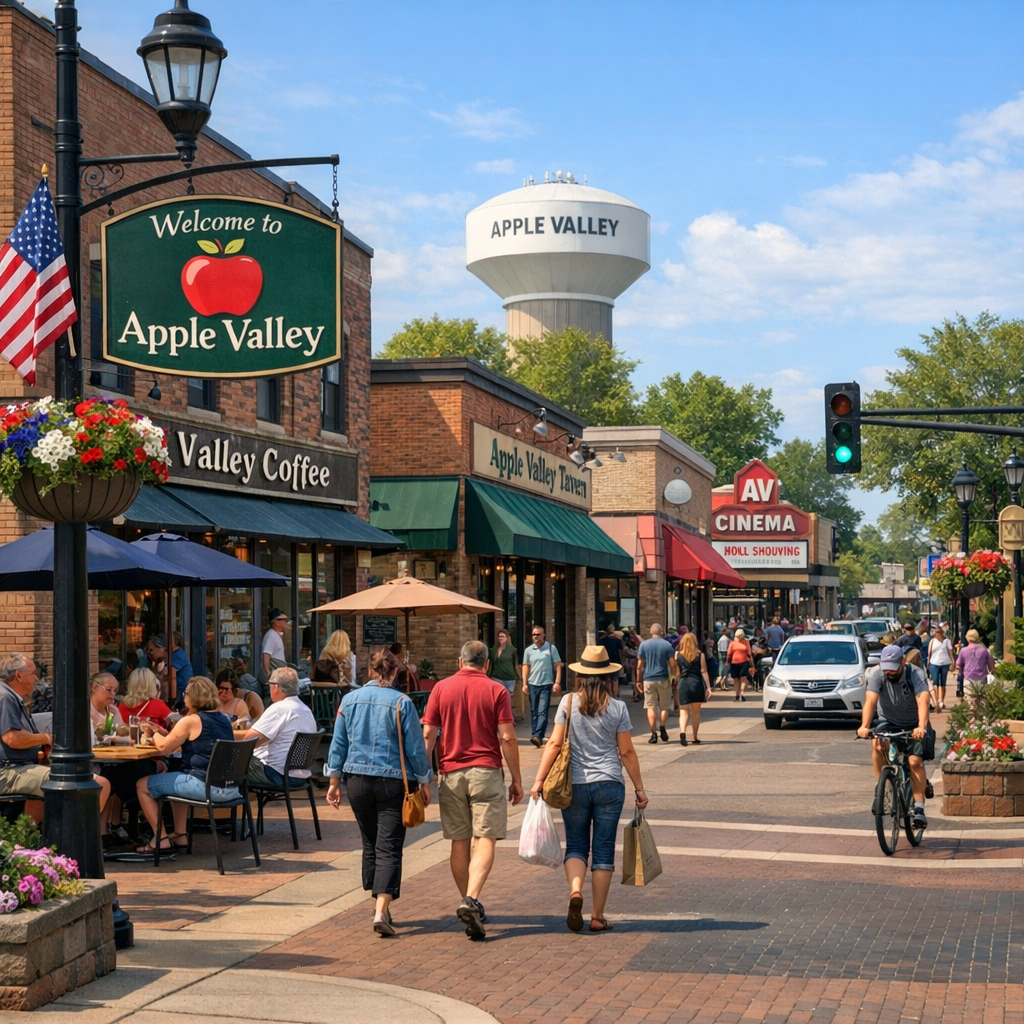
Apple Valley’s commercial activity is impressive, generating nearly $1 billion annually. The city has cultivated a strong central downtown area featuring 21 financial institutions and hundreds of stores and services, all interconnected by a circular “Ring Route” adorned with distinctive red-iron fences and lampposts. This intentional design concentrates commercial activities into a vibrant hub, while residential areas remain relatively commercial-free, preserving the community’s suburban charm.
Key Employers and Economic Drivers
The local economy is supported by a diverse range of industries. According to the city’s Comprehensive Annual Financial Report, top employers include Independent School District 196, Target Corporation, Uponor, Dakota County, and Walmart. These organizations provide substantial employment opportunities, contributing to the city’s low unemployment rate of 3.9%, which is near the national rate of 3.7%.
Additionally, the presence of institutions like the Minnesota Zoo and the Apple Valley Medical Clinic further bolster the local economy by attracting visitors and providing essential services to residents.
Strategic Initiatives and Future Growth
Apple Valley’s commitment to sustainable growth is encapsulated in its 2040 Comprehensive Plan, adopted by the City Council in 2020. This blueprint outlines long-term goals aimed at providing a safe and healthy environment for residents, supporting businesses to create jobs, and preserving the high quality of life that the community values.
Transportation infrastructure plays a pivotal role in the city’s development. Apple Valley is home to Minnesota’s first Bus Rapid Transit (BRT) line, which began operations in 2013. This system features dedicated lanes, priority signaling, and 15-minute run times, effectively enhancing connectivity and supporting the city’s ongoing renaissance of higher-density housing, pedestrian-friendly shops, bike paths, and entertainment options.
A Collaborative Community
The Apple Valley Chamber of Commerce exemplifies the city’s collaborative spirit. With over 600 businesses as members—more than twice the national average for chamber participation—the Chamber fosters a supportive environment for entrepreneurs and established businesses alike. This collective effort has earned Apple Valley recognition as the 20th Best Place to Live in the United States, a testament to the synergy between the city, businesses, and residents.
In conclusion, Apple Valley’s strategic location, educated workforce, and proactive community initiatives create a thriving economic landscape. The city’s commitment to balanced growth and quality of life ensures that it remains an attractive destination for businesses and residents now and in the future.