

Apple Valley, Minnesota, experiences a humid continental climate characterized by four distinct seasons. Residents enjoy warm, wet summers and cold, snowy winters, with temperatures typically ranging from 9°F to 82°F throughout the year. The warm season lasts from late May to mid-September, with July being the hottest month, averaging highs of 82°F and lows of 63°F. Conversely, the cold season spans from late November to early March, with January being the coldest month, averaging highs of 23°F and lows of 7°F.
Precipitation is fairly evenly distributed throughout the year, with June being the wettest month, receiving an average of 5.17 inches of rainfall. Snowfall is common during the winter months, contributing to the region’s picturesque winter landscapes.
Environmental Initiatives
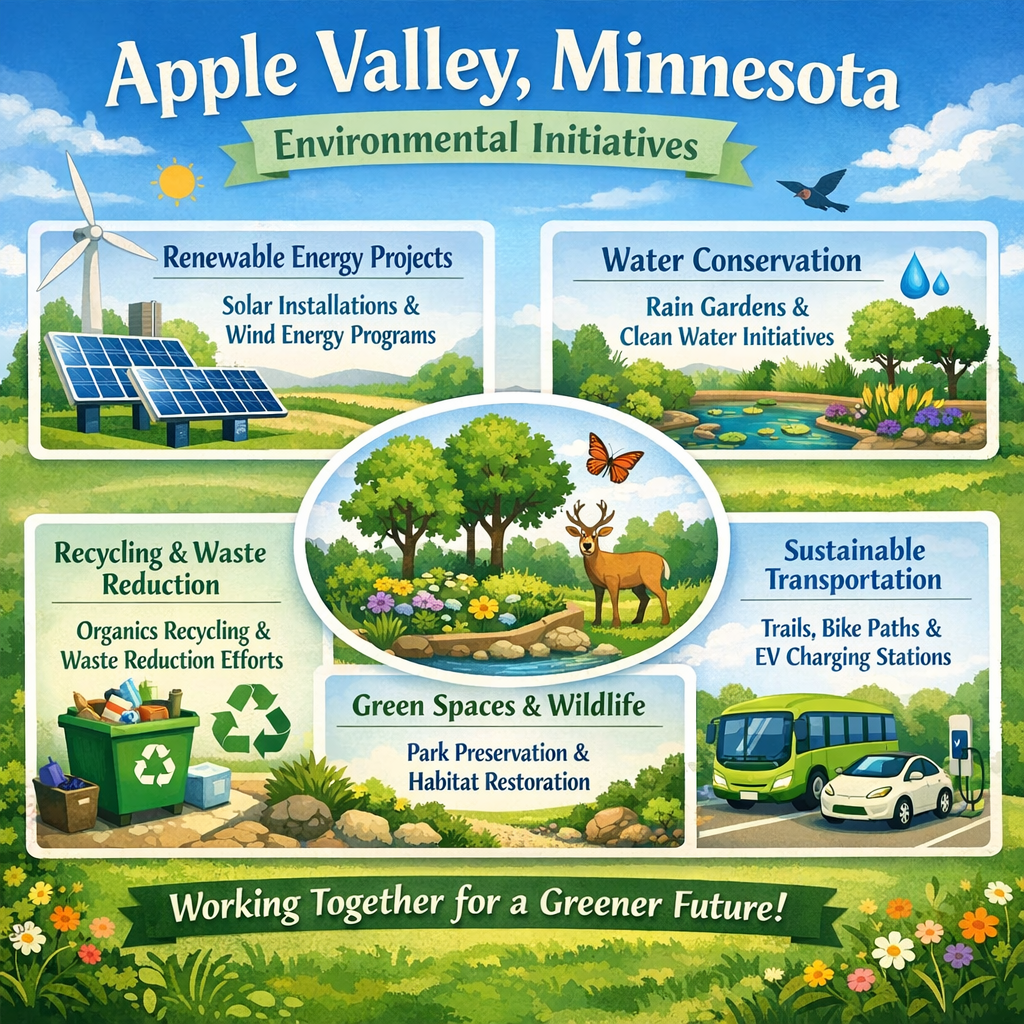
Apple Valley is committed to preserving its natural resources and maintaining a healthy environment for its residents. The city has implemented several initiatives to address environmental concerns:
Stormwater Pollution Prevention Program
Stormwater runoff is a significant concern for surface water quality in Apple Valley. To mitigate this, the city has developed a Stormwater Pollution Prevention Program (SWPPP) in compliance with the federal Clean Water Act. This program outlines management practices aimed at reducing pollution entering water bodies through the stormwater system. The Minnesota Pollution Control Agency oversees and administers the permit program to ensure that federal and state requirements are met.
PFAS Monitoring
Per- and Polyfluoroalkyl Substances (PFAS) are emerging contaminants detected in groundwater across various cities, including Apple Valley. In collaboration with the Minnesota Department of Health, the city continuously monitors its public water system for PFAS. In 2021, tests revealed that two of the city’s wells exceeded the state’s limits for PFAS. Although the treated water remained within safe limits, these wells were promptly removed from service as a precautionary measure.
Sustainability Efforts
Apple Valley has undertaken various sustainability projects to enhance environmental quality. Notably, the city has constructed boulevard rain gardens with pollinator plantings, tree trenches, and underground sediment collection devices. These initiatives aim to reduce phosphorus levels in Long Lake by approximately 8.9 pounds per year, accounting for about 17% of the remaining watershed phosphorus load reduction needed to meet water quality goals.
Additionally, the city has installed rain gardens at over 40 facilities and parks, with plans to include them in future park improvement projects. Rain gardens are effective in collecting rainwater, allowing it to infiltrate the ground, thereby reducing runoff, filtering sediment, and decreasing the amount of phosphorus entering the environment.
Through these concerted efforts, Apple Valley continues to demonstrate its commitment to environmental stewardship and the well-being of its community.